


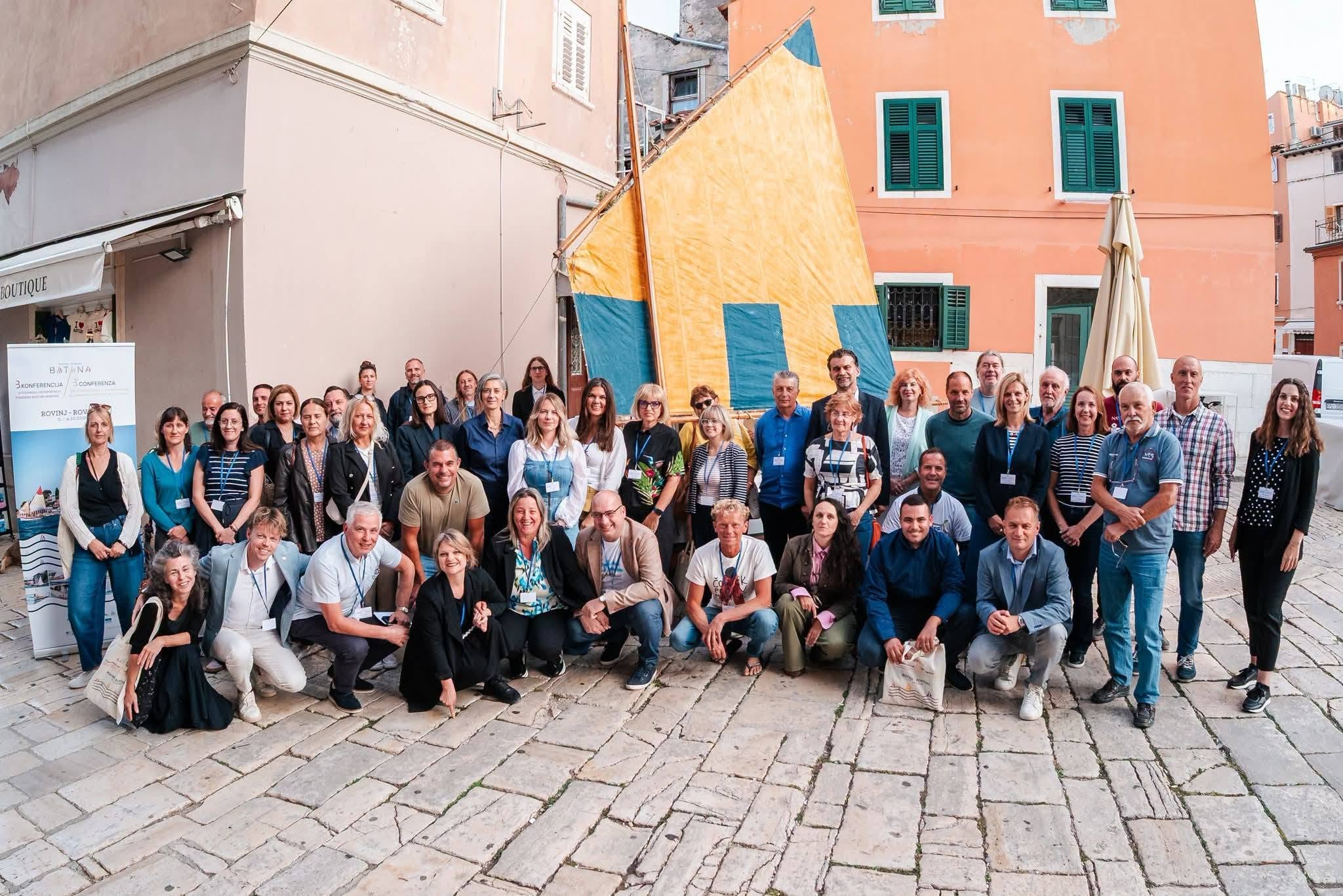
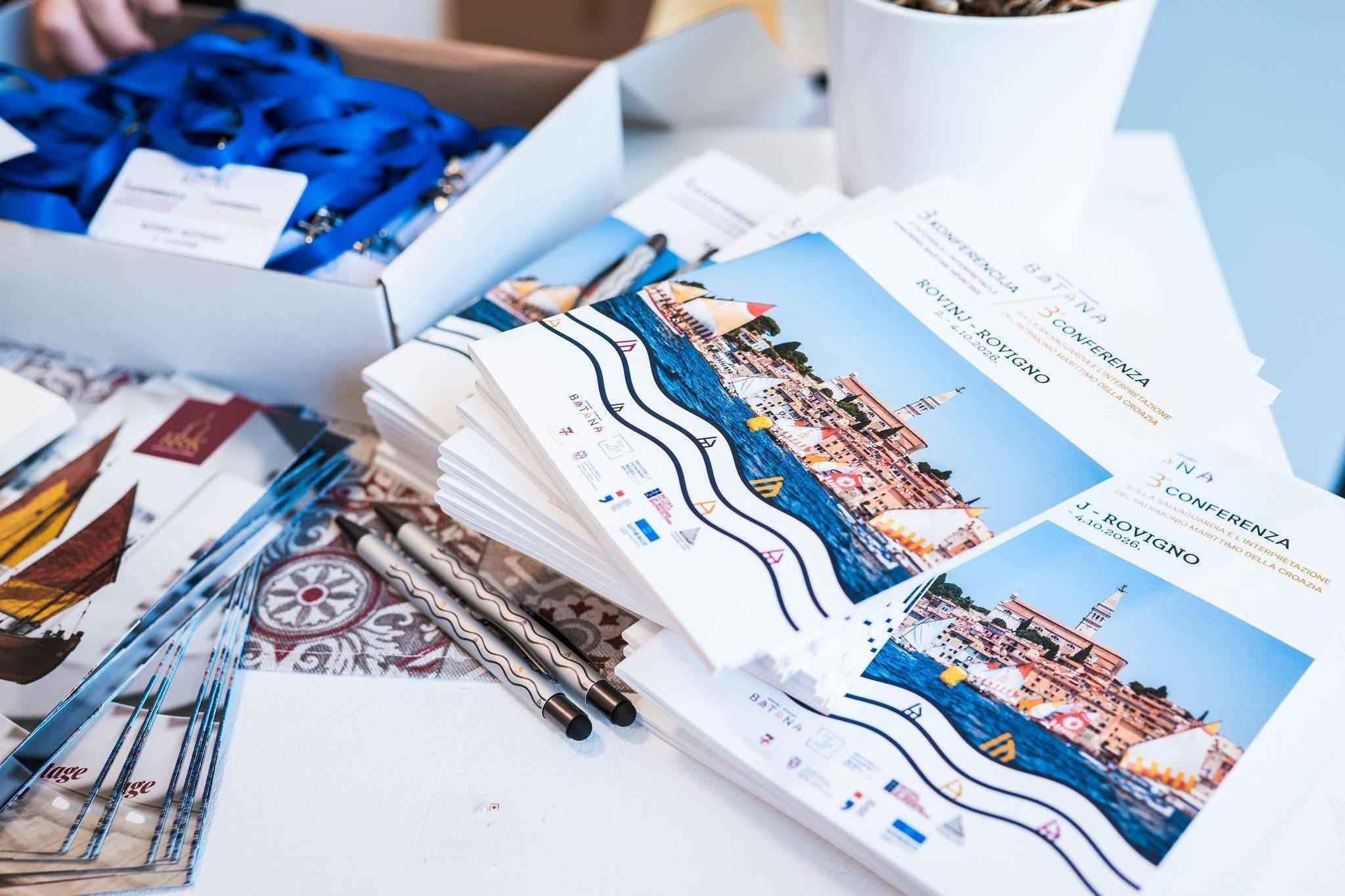
The story of Bakarac’s traditional tuneras, its former fishermen, and the TIRA event was presented at the 3rd Conference on the Preservation and Interpretation of Croatia’s Maritime Heritage, held in Rovinj from 2 to 4 October 2026.
The conference brought together experts, museum professionals, researchers, representatives of institutions and associations, as well as custodians of traditional knowledge and skills from across Croatia. Through five thematic sessions, participants discussed contemporary approaches to preserving maritime heritage, its sustainability, the role of local communities, and the importance of passing traditions on to younger generations.
This year’s gathering also carried special symbolic significance, as Rovinj’s Batana Eco-Museum is celebrating the tenth anniversary of its inscription on UNESCO’s Register of Good Safeguarding Practices for Intangible Cultural Heritage.
Among the many examples of good practice, Bakarac, a small coastal town with a rich fishing history, also took centre stage.
At the Antonio Gandusio Theatre, Ivo Polić, representing the Tira Association and the Faculty of Maritime Studies in Rijeka, delivered a presentation entitled “TIRA – A Contemporary Approach to Preserving and Interpreting Maritime Heritage: The Example of Bakarac’s Tuneras.”
The presentation explored Bakarac’s centuries-old tuna fishing tradition, focusing in particular on how the local community is working today to preserve the memory of life around the traditional tuna fishing watchtowers.
TIRA – bringing heritage to life
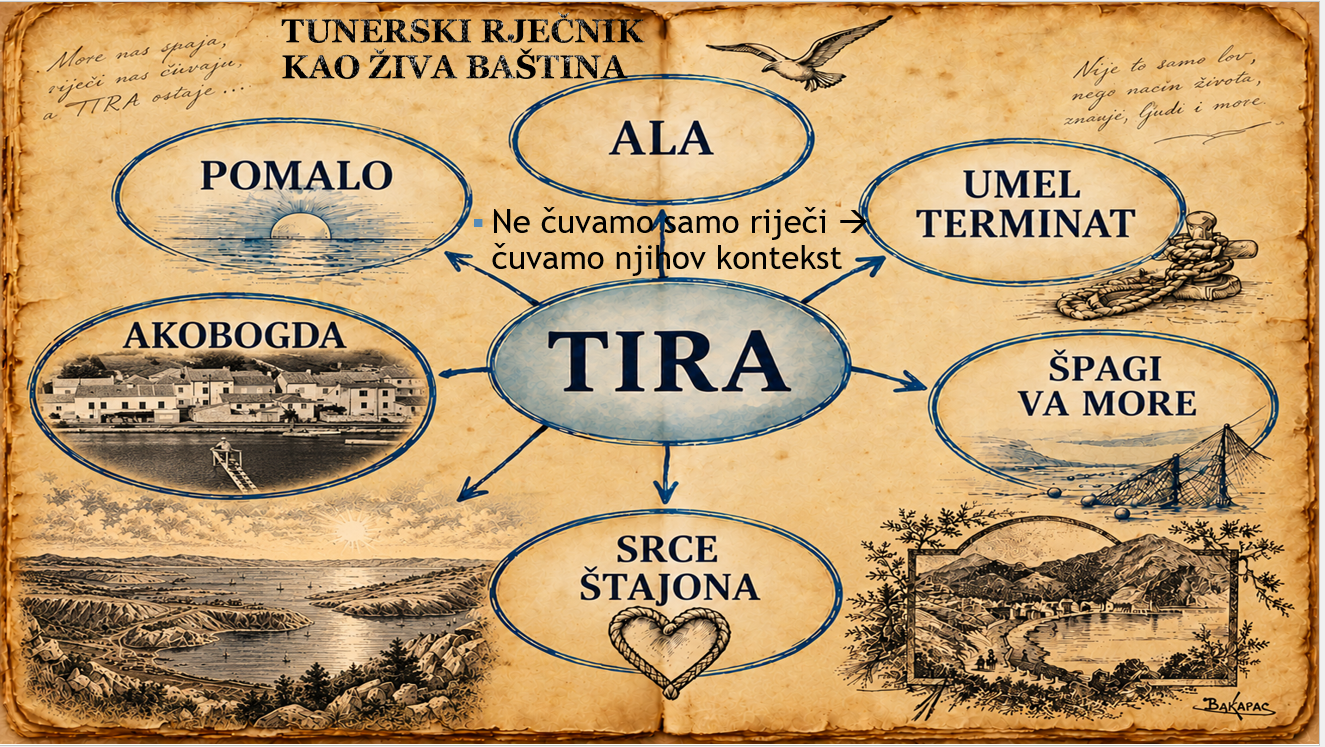
The TIRA event, launched in 2015 at the initiative of Renato Frank and a group of local enthusiasts, has grown into a distinctive story of preserving Bakarac’s fishing identity.
Its value lies not only in recalling the days of traditional tuna fishing, but also in the way it brings the past closer to today’s generations.
Rather than leaving heritage behind museum glass, TIRA invites people to take part. To touch, work, talk, learn, and share an experience. Traditional fishing tools, expressions, skills, and customs are thus given new meaning.
TIRA has not brought tuna fishing back to life as a working practice. Instead, it has revived its story, its experience, its memories, and the opportunity to participate.
It was precisely this approach that was presented in Rovinj as an example of heritage interpretation that preserves not only the tangible traces of the past, but also something far more delicate: knowledge, language, customs, identity, and a sense of belonging to a community.
Mića Tira – little fishers, a big future
Special attention during the presentation was given to Mića Tira, a program designed for the youngest generations, introducing them to their hometown’s fishing heritage through hands-on experiences.
By learning to tie knots, discovering traditional fishing equipment and customs, and exploring the techniques once used in tuna fishing, children become more than observers of heritage: they become active participants and its future custodians.
Mića Tira clearly demonstrates the event’s considerable potential for further development, as well as its long-term contribution to preserving Bakarac’s identity.
TIRA transforms stories from the past into experiences in the present, while Mića Tira represents a commitment to the future. After all, today’s young participants may become tomorrow’s dedicated bearers of the tradition that previous generations preserved and passed on to them.
Heritage preserved by the community
Behind TIRA are years of volunteer work, enthusiasm, and deep affection for the local area. Its story is shaped by people who understand that preserving tradition is not merely about the past, but also about our responsibility towards the future.
The City of Kraljevica and the Kraljevica Tourist Board provide important support for the event, particularly in organising Mića Tira, alongside numerous other individuals, institutions, and associations connected with Bakarac and its fishing heritage.
Participation in the conference in Rovinj provided an opportunity to present these collective efforts to a professional audience and connect Bakarac’s experiences with similar initiatives throughout the Adriatic region.
The conference also opened up important discussions on future cooperation, networking among heritage institutions and associations, and the development of sustainable models for preserving maritime traditions.

From Bakarac, with memories of the past and eyes on the future
The story of TIRA, presented in Rovinj, once again demonstrated that the significance of a heritage tradition is not determined by the size of the place it comes from. The former fishermen of Bakarac, their tuna fishing watchtowers, boats, nets, words, and customs are part of a much broader Mediterranean story – one that connects generations and coastlines, the past and the present.
For Bakarac, taking part in the conference was an opportunity to make its voice heard beyond the boundaries of its own bay and to give its fishing heritage the recognition it deserves among Croatia’s custodians of maritime tradition.
Perhaps the most important message of the entire gathering is also the simplest one: heritage remains alive only if we continue to practise it and pass it on.
That is why TIRA’s story does not end in Rovinj. It returns to Bakarac, to its people, to the tuna fishing watchtowers, and to the youngest generations, who will one day carry the story forward. For today they are little ones, but tomorrow they will be the great custodians of our tradition.